Thinking about buying a character home in Cumberland? The charm is real, but so are the extra questions that come with an older property. If you want the wood floors, original trim, and small-town history without unwanted surprises, it helps to know what a standard inspection can and cannot tell you. Let’s walk through the inspection essentials so you can separate character from risk before you move forward.
Why Cumberland homes need extra care
Cumberland has a well-known historic identity, and parts of the village are covered by a formal heritage framework. The Village of Cumberland notes that the downtown Historic Village Commercial Core is a designated Heritage Conservation Area along Dunsmuir Avenue between First Street and Fifth Street, and the community also has many older buildings and structures dating back to the late 1800s and early 1900s, as shown through its heritage planning materials and Community Heritage Register. You can review that context through the Village’s information on heritage and development in downtown Cumberland.
For you as a buyer, that means an older home may come with both age-related maintenance needs and possible permit considerations. It does not mean you should avoid older homes. It simply means you should look at them with a more detailed lens.
Cumberland buyers also need to think practically about moisture. British Columbia climate reporting shows the province has seen increasing annual average precipitation over time, along with more wet years and more extreme precipitation events, which is important context when you are evaluating roofs, crawlspaces, basements, and drainage around an older home. That broader provincial trend is outlined in BC’s reporting on precipitation and climate change.
Start with the right inspection mindset
A home inspection is helpful, but it is not a guarantee that every issue will be found. In British Columbia, inspectors must be licensed, and Consumer Protection BC’s home inspection guidance makes it clear that a home inspection is visual only.
That matters even more with character homes. Some concerns are hidden behind walls, under floors, or above ceilings. Older materials, past renovations, and long-term moisture problems may need follow-up from specialists rather than relying on the general inspection alone.
The inspection report is also not a pass-or-fail test. Instead, think of it as a tool that helps you decide what needs more review, what looks like regular maintenance, and what may affect your budget or willingness to proceed.
Focus on moisture and drainage first
In a place like Cumberland, water management should be near the top of your list. Older homes often have basements, crawlspaces, or foundation details that are more vulnerable to moisture, especially during heavy rain.
CMHC notes that basement moisture problems can show up as flooding, leakage through cracks or joints, water penetration at the top of the foundation wall, damp floors, efflorescence, rotting wood, and signs of poor drainage or blocked perimeter drains. Their guidance is especially useful when you are trying to understand whether a damp basement is a minor issue or the sign of a larger problem. You can read more in CMHC’s basement moisture and mould resource guide.
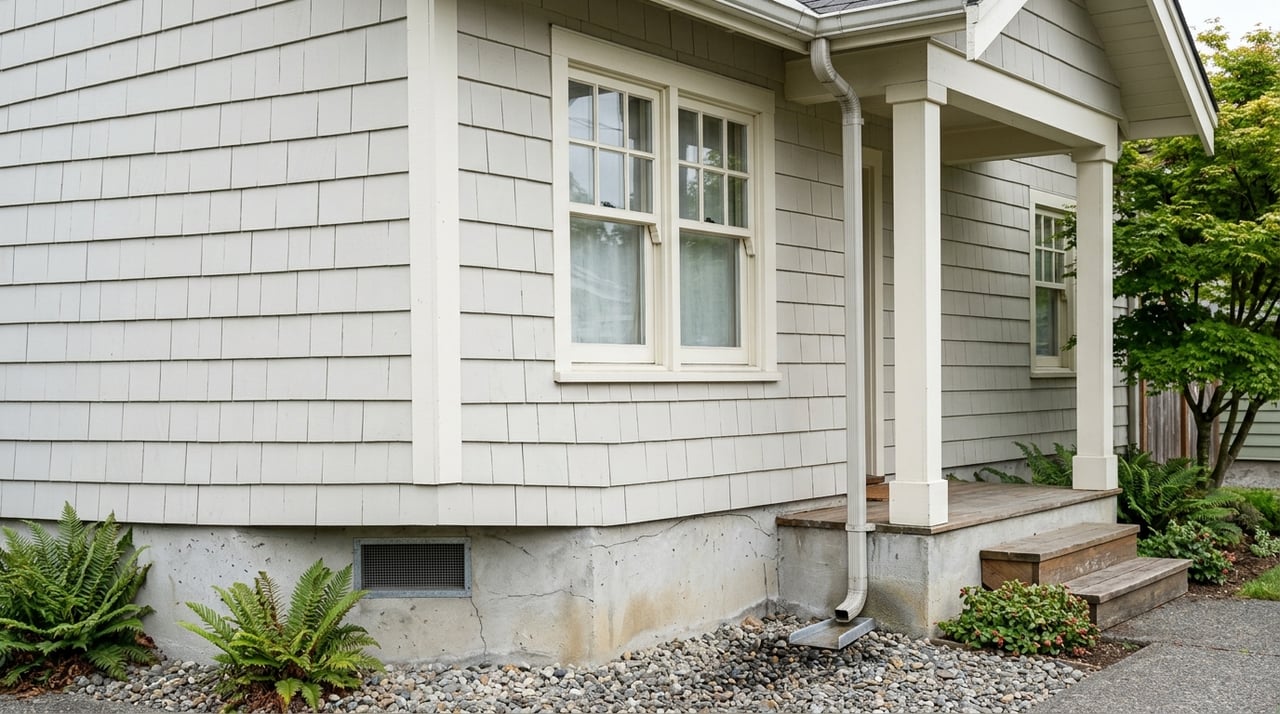
The Vancouver Heritage Foundation also recommends checking for cracks in foundation walls, confirming that the ground slopes away from the house, and making sure downspouts carry water well away from the foundation. In practical terms, these are some of the first things you should pay attention to during a showing and again during the inspection.
Signs to watch for outside
- Soil sloping toward the house instead of away from it
- Downspouts ending too close to the foundation
- Standing water or muddy areas near the home
- Damaged gutters or missing flashing
- Exterior wood that shows peeling paint or signs of rot
Signs to watch for inside
- Musty smells in the basement or crawlspace
- White chalky residue on foundation walls
- Damp spots, staining, or bubbling paint
- Uneven floors near foundation areas
- Visible cracks in concrete or masonry
Some of these findings may point to maintenance rather than a major structural issue. But recurring dampness, active water entry, or evidence of hidden moisture deserves deeper review before you remove your protections.
Know the hidden hazards in older homes
Character homes often include materials that were common when the house was built but now require more caution. This is one of the biggest reasons why an older property may need more than a standard visual inspection.
Health Canada says homes built before 1960 probably contain lead-based paint, and homes built between 1960 and 1990 may still have lead in exterior paint. Health Canada also notes that asbestos was widely used in homes and buildings before 1990, and it advises professional testing before renovation if asbestos is a concern. Their overview of lead-based paint and older homes is a good starting point.
If you are buying a home with plans to renovate soon after possession, this matters even more. A property can look beautifully updated on the surface while still containing older materials in insulation, flooring, ceilings, or wall systems.
Common legacy concerns
- Lead-based paint in older interior or exterior finishes
- Asbestos in insulation, textured ceilings, flooring, or other building materials
- Older electrical systems that may need upgrades
- Renovations completed without clear documentation or permits
These are not automatic deal-breakers. They are due-diligence items that can affect your renovation plans, financing comfort, insurance questions, and post-closing budget.
Check the electrical system carefully
Electrical issues are another big inspection point in older Cumberland homes. According to BC Hydro, homes built before 1950 should be checked for knob-and-tube wiring, and any active knob-and-tube should be decommissioned and rewired by a licensed electrician.
A general inspector may flag concerns, but electrical problems are one of the areas that can require a specialist. BCFSA also notes that home inspections may not reveal all electrical or gas issues, especially when there are signs of problems or work appears to have been done without permits.
If the home shows signs of older wiring, patchwork upgrades, or undocumented changes, it is smart to bring in a licensed electrician before moving ahead. That extra step can help you understand both safety concerns and likely upgrade costs.
Understand what the inspection may miss
One of the most important things to know is that a standard home inspection has limits. Consumer Protection BC explains that the inspection contract should spell out what is covered, including whether items like mold or asbestos will be reviewed.
That means you should not assume every major concern is included. If the home is older and the inspector sees warning signs, you may need follow-up from a structural engineer, drainage contractor, heritage-experienced builder, or other specialist.
The Vancouver Heritage Foundation also recommends contacting a contractor or consultant with experience in older buildings when needed. That advice is especially relevant if inspection findings involve foundation movement, recurring moisture, missing flashing, or older materials that could affect renovation work.
Heritage status can affect your plans
Not every older Cumberland home has the same heritage implications. This is an important detail to confirm early.
The Village of Cumberland explains that being in the Heritage Conservation Area is different from simply being on the Community Heritage Register. If a property is in the Historic Village Commercial Core, a Heritage Alteration Permit is required before subdivision, additions, new construction, alterations, or demolition, although some minor work may be exempt and should be confirmed with Village staff.
For you, this can affect renovation timelines, approvals, and cost planning. If you are considering changing windows, adding square footage, or making exterior changes, it is worth confirming the property’s status before you finalize the purchase.
Use your due diligence time well
In BC, the current Home Buyer Rescission Period gives buyers three business days after acceptance to rescind certain residential contracts, with a fee of 0.25% of the purchase price. The Province says this window is meant to give buyers time to secure financing and arrange inspections.
That can be helpful, but with a Cumberland character home, your broader due diligence strategy still matters. If the home may need specialist reviews, permit checks, insurance confirmation, or repair quotes, make sure your offer structure gives you enough time to get real answers.
BCFSA also says a Property Disclosure Statement is voluntary, but it is a useful starting point for further inquiry. If a seller provides a Property No Disclosure Statement instead, that is a sign to be especially thorough and to ask more questions.
Smart buyer steps
- Request a seller-completed Property Disclosure Statement when possible
- Confirm whether the property is inside the Heritage Conservation Area
- Review permit history for additions or major upgrades
- Book a licensed home inspector early
- Bring in specialists if the inspection raises red flags
- Get independent quotes for significant repairs or upgrades
- Check financing and insurance implications before removing protections
Separate maintenance from major risk
One of the biggest mistakes buyers make is treating every inspection item the same. In reality, some findings are routine ownership issues, while others deserve urgent follow-up.
Minor items such as worn caulking, peeling paint, drafty windows, aging weatherstripping, or gutters that do not move water far enough away from the house are often maintenance issues. They still matter, especially in a wet climate, but they are usually different from concerns like active foundation water intrusion, recurring dampness, suspected asbestos, or outdated wiring that needs rewiring.
Consumer Protection BC recommends getting three independent quotes for repairs. That is one of the best ways to turn an inspection report into a realistic budget rather than a vague list of concerns.
Buying with confidence in Cumberland
Buying a character home in Cumberland is not about avoiding older properties. It is about understanding what you are buying before you remove your protections. When you pay close attention to moisture, drainage, hidden hazards, electrical systems, permit history, and heritage status, you give yourself a much clearer picture of the home and the costs that may come with it.
If you want calm, hands-on guidance as you evaluate a Cumberland character home, Stevie Cauvier can help you navigate inspections, due diligence, and the details that matter before you commit.
FAQs
What should you inspect first in a Cumberland character home?
- Start with moisture and drainage, including the roof, gutters, downspouts, grading, crawlspace, basement, and foundation, because water issues can lead to larger repair costs over time.
Does a standard BC home inspection catch everything in an older home?
- No. A standard home inspection in BC is visual only, which means hidden issues behind walls, under floors, or in specialized systems may require additional expert review.
Are all inspection issues in Cumberland character homes expensive?
- No. Some findings are routine maintenance items, while others like recurring moisture, active knob-and-tube wiring, lead concerns, or suspected asbestos may require more significant follow-up and budgeting.
Why does heritage status matter when buying in Cumberland?
- Heritage status can affect what changes you may be allowed to make, especially if the property is inside the Heritage Conservation Area where a Heritage Alteration Permit may be required for certain work.
What should you do if a Cumberland inspection report raises concerns?
- Use your due diligence time to get specialist opinions, gather repair quotes, review permits, and confirm how the findings may affect financing, insurance, or renovation plans before moving ahead.